Run a Customer Interview Without Leading
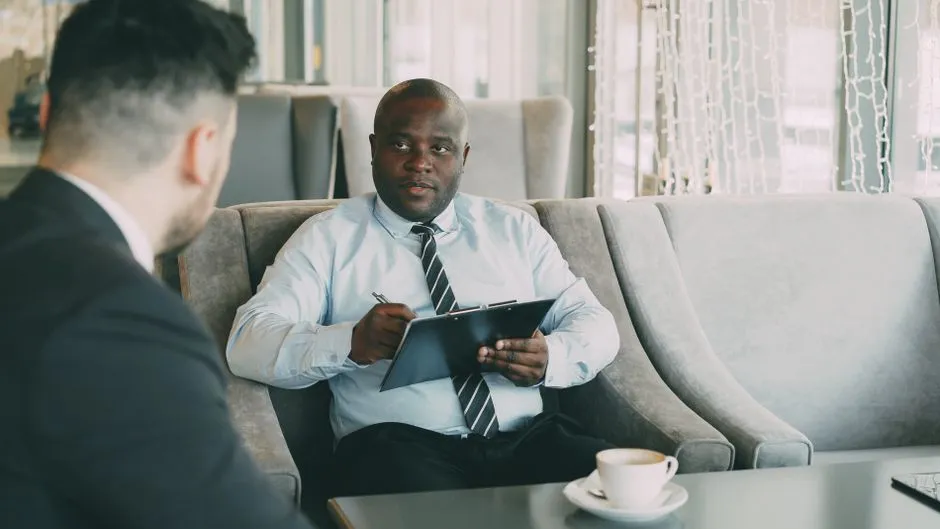
Ask for a recent story before offering a solution
Run a customer interview without leading by choosing one learning question, asking about a specific recent event, and following the person's actions, alternatives, constraints, and decisions in their own words. Keep your idea and preferred answer out of the question. End by summarizing what you heard and checking your understanding, not by asking whether they like the startup.
An interview is evidence about this participant's experience. It is not a representative survey, a product order, or proof of a market. Five enthusiastic compliments remain compliments, even when entered into a spreadsheet wearing currency formatting.
Define the decision the interview should inform
Write the risky assumption and the decision attached to it right now. For example: Do people currently spend meaningful effort reconciling these records, and should we test a simpler workflow? Avoid goals such as “validate the product,” which quietly asks the conversation to return one approved conclusion.
Choose participants who have encountered the situation, not only friends who understand why the idea sounds exciting. Define relevant experience without targeting or excluding people unlawfully or unethically.
Explain who you are, the purpose, expected length, note or recording method, privacy, compensation if any, and how the person can decline or stop. Obtain appropriate consent. Do not collect sensitive personal, health, financial, employment, or confidential business information without a justified, approved plan.
Browse customer discovery for more evidence-led research setup.
Build a neutral question path
Start broad: “Tell me about the last time you had to….” Then ask:
- What triggered it?
- What did you do first?
- What happened next?
- What tools or people were involved?
- Where did you pause, repeat, or change direction?
- What did the outcome cost in time, money, risk, or effort?
- What have you tried before?
Ask “how” and “what” more often than “would.” Future intentions are easy to state and hard to interpret. A recent event gives the participant something concrete to reconstruct.
Avoid loading the problem into the question: “How frustrating is the slow process?” assumes it is slow and frustrating. Ask “How would you describe the process?” and follow the language they choose.
Follow evidence without conducting a cross-examination
When a statement is abstract, request an example: “Can you walk me through the last instance?” Ask what the person actually used, paid, delayed, abandoned, or asked someone else to do.
Use short neutral prompts—“What happened then?” or “Tell me more”—and allow silence. Do not rescue every pause with a miniature sales pitch. The participant is thinking, not buffering.
When the story contradicts your assumption, explore it with the same curiosity. Do not debate, teach the person the correct problem, or keep reformulating until they agree.
Keep the concept test separate
If you show an idea, label the transition. Present the smallest neutral description or prototype needed for the next question, then ask the participant to interpret or use it without a feature tour.
Observe what they expect, where they hesitate, and what they do. “Would you use this?” invites politeness and imagination. A task with a prototype reveals whether the proposed flow makes sense under test conditions.
Use our paper-prototype guide for a low-cost concept session, and visit prototype workshop for materials and test boundaries.
Debrief facts before themes
Immediately after, separate observed or said, interpretation, and decision. Preserve short exact phrases only with consent and appropriate handling. Remove unnecessary identifying detail.
Compare interviews for repeated behaviors, constraints, alternatives, and consequences, but retain counterexamples. Do not convert frequency in a small convenience sample into a market percentage.
Write what would change your mind and choose the next test. That may be another participant segment, a workflow observation, a pricing experiment conducted ethically, or a decision to stop.
The interview has succeeded when it makes the next decision better, including the inconvenient decision that the problem is smaller, different, or already well served. Discovery is not a courtroom where the idea wins; it is a workshop where the expensive mistake is invited to identify itself early.